Total Pageviews

Showing posts with label Wales. Show all posts

Tuesday, November 24, 2015

TREDEGAR HOUSE: Home of one of Wales Most Illustrious Families


 TREDEGAR HOUSE

It was the mention of the famous pirate Capt. Henry Morgan that first sparked my interest when my cousin Nicola suggested we visit a country manor in Wales. Although Capt. Morgan, for whom the famous rum was named, was the son of one of the nine illustrious sons of the original owner of this 17th century Charles II era country house, it somehow made the visit more intriguing.

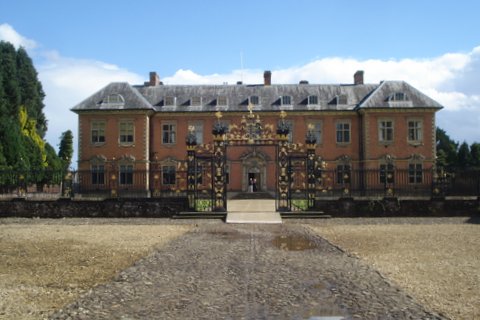
Tredegar House, near Newport Wales, was the home of the Morgan family for over 500 years and later the home of the Lords Tredegar, one of the most powerful and influential families in the area. The mansion is surrounded by a landscaped garden of 90 acres and is one of the most outstanding houses of the Restoration period in Britain.  The earliest part of the building dates back to the late 15th century but it’s been restored over the ages. It was originally built of stone and later rebuilt with red brick.


The name Tredegar came from Tredegar Fawr, the name of the mansion of the old Morgans who were descended from Cadifor the Great, the son of Collwyn who owned the land where the mansion stands. It was occupied by the Morgan family from about 1402. The earliest documented owner was Llewelyn ap Morgan. The Morgans were one of the most powerful and influential families in the area. In 1448 John Morgan was created a Knight of the Holy Sepulchre and was rewarded for his support of King Henry VII. Around 1490 he commissioned the building of a new house at Tredegar, though a wing of the original stone manor house still exists. The newer palatial house was visited by Charles I and his retinue during the 1600’s.
We walked through the gardens and passed through the high ornate Edney Gates to get into the building. The gilded gates were built between 1714 and 1718 for John Morgan and are an example of early 18th century decorative wrought ironwork. Just past the gates is the Stable Block which housed the many horses owned by the family.
The Edney Gates


Once inside the palatial mansion, the docent showed us the way to proceed through the various rooms, all furnished in the style of the period with oil paintings on the walls. In one of the rooms there was a large oil painting of Godfrey Morgan who fought in the Charge of the Light Brigade. He is pictured with his famous steed, Sir Briggs. Morgan, age 22 and Captain in the 17th Lancers, and his horse survived the battle.  They lived at Tredgar house until the horse’s death at the age of 28. Sir Briggs was buried with full military honours in the Cedar Garden of Tredgar House. There were luxurious bedrooms with decorative furnishings, everything laid out as if the rooms were still occupied by the ladies and gentlemen of the family. In the dining room there was even food displayed on the tables to illustrate the sumptuous feasts that were served there.
Every room we visited had display of the history of this illustrious family, throughout the generations.

Godfrey Morgan and Sir Briggs


The Dining Room

The Morgans were a renown family. Besides the infamous Caribbean privateer, Henry (Sir Harri) Morgan who began as an admiral of the Royal Navy, there are many tales of ill-fated marriages, riotous parties, war heroism and even the dark arts. The docent hosts at the house related some of these tales to us as we walked through the various room.


We visited the servant's quarters and kitchens which were reminiscent of the popular TV series Downton Abbey. There some of the secrets of the servants were revealed including concealed drawers full of spices and a silver safe that was always protected by a guard.
 Buzzers for calling servants

Kitchen


Head Servant's quarters

Eventually the family's financial assets were depleted through their extravagant lifestyle and the eccentricities of the owners. The last Baron of Tredegar, John Morgan, died childless in 1962 at aged 54. His death was the end of the Morgans of Tredegar. In 1951 the house was stripped and the contest auctioned. It was turned over the National Trust and refurbished in 2012. 


Friday, November 13, 2015

A VISIT TO ‘MY’ CASTLE, CAERPHILLY WALES


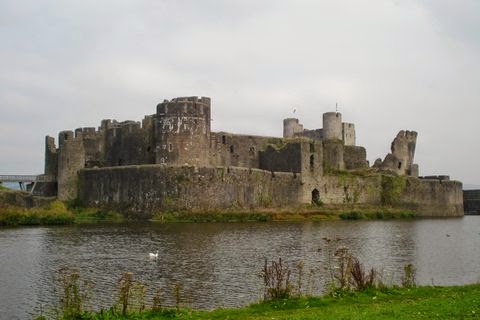
Caerphilly Castle

Every time I visit my dad’s home in Caerphilly Wales, I spend at least a day ‘inspecting’ my castle. If you wonder why I’ve laid claim to this famous castle, built back in 1271 by the English chieftain Earl Gilbert de Clare, it’s because I grew up hearing stories from Dad who used to play inside it when he was a boy. From the first time I actually saw the castle back in the mid ‘70’s up until now, I feel I ‘own’ a piece of it and thus I have chosen to refer to it as my castle!


Earl Gilbert de Clare’s castle was besieged by Llewelyn, Prince of Wales, back in the late 1200s and Henry III stepped in to enforce a truce after which Earl Gilbert regained possession of the castle.


It was again attacked in 1316 during a revolt by another Welsh lord, Llewelyn Bren. During the 15th century it fell into decay and it wasn’t until 1929 that it was restored by the Marquises of Bute. It’s one of the best preserved castles in Wales and is now protected by the Department of Environment.


The castle has many stories to tell.  In one big room there is a tapestry hanging on the wall depicting three women who were noted inhabitants.  The first is Alice de Lusignon (1236-1290) the first wife of Gilbert de Clare. As he was away at war much of the time, the lonely queen found comfort in the arms of a local knight. When Gilbert found out he had the knight hanged and annulled his marriage to Alice. In despair she left off the castle walls. It is her ghost who is said to haunt the castle.

I published a story about this famous myths, the Green Lady, a tale that has intrigued me since I first began to visit Caerphilly castle. I’m always aware of her apparition each time I go, watch for her on the walls on a moonlit night, ‘feel’ her presence as I wander the narrow stone passageways and enter the big empty palace rooms.


 The second woman is Joan of Acre (1272-1307) daughter of Edward 1 who became Gilbert de Clares wife in 1290. After bearing him four children, Gilbert died so her father arranged a second marriage but against his wishes she married a commoner, a knight named Ralph de Monthermen who later the king grew to like and accepted the marriage.


Eleanor de Clare is the third woman pictured in the tapestry (1292-1337). She was the daughter of Gilbert and Joan. After Gilbert died the castle was bequeathed to his 3 sons but while they were away the castle was besieged by Llewelyn Bren and under Eleanor’s it was successful held out til help arrived. She also survived an unhappy marriage to a dangerous and disliked husband and an imprisonment in the Tower of London.


As you stroll around the long passages and up the winding stairways you’ll see different displays and art work telling the castle’s history. And out front, beside the moat there is an interesting display of siege equipment. 

Sunday, July 26, 2015

TRIP PLANS 2015: LONDON, THE COTSWOLDS and CAERPHILLY WALES


Houses of Parliament by the Thames

Richard the Lionhearted
'm just starting to plan my travels for 2015, leaving here August 28 with my first stop being LONDON.

I've been there so many times it's almost like returning 'home'. But each time I go I love to see new things (and there's lots to see in London!)  This time I think I'll visit the Tower of London as I haven't been for some years. And of course I'll browse around all the old familiar haunts.  I'll be staying at the Indian Y as usual (breakfast and dinner included) and it's right in the Bloomsbury area with a lot of historical houses including the one where Virginia Wolf lived which is right across the park from the Y. 
Queen Victoria monument

The London Eye
I always go on the London Walks and this time I notice there is one called "The Cotswold Walk" which really interests me as I haven't been to the Cotswolds for years either.  You meet a the Paddington train station and go from there for the day. These walks are always so much fun and this one sounds outstanding.

THE COTSWOLDS is an area in S. central England


roughly 25 mi (40K) across and 90 miles (145 Km) long just south of Stratford-on-Avon to just south of Bath. The name means "sheep enclosure in rolling hillsides" ("wold" meaning 'hills')  The name is derived from the 12th century "Codesuualt" or "Cod's-wold" - Cod's is high open land (old English) or it could come from Brittonic name "Cuda"  - a mother goddess in Celtic myth who was thoughtot reside int hat area.  Cotswolds is famous for its honey-colored limestone villages.  http://coswolds.com  

 Caerphilly Castle

After that, I'll be heading to WALES to visit my cousins in CAERPHILLY (where my dad was from). I love going there and every time I do I visit 'my castle', the Caerphilly Castle, one of the most magnificent in the UK.  I'll only be in Caerphilly for a couple of days before heading to Cardiff to catch a flight to Alicante, Spain where my friend Inka will meet me to take me to her home town farther along the south coast to Torrevieja.  
Me, in front of my castle.

NEXT STOP: SPAIN 

Sunday, November 09, 2014

ENGLAND 2014: FIRST STOP, CAERPHILLY, WALES!


Caerphilly Castle

My father, Rev. Fred Filer, grew up in the town of Caerphilly, Wales (Caerffili) and ever since my very first trip overseas in 1973, I have made it my first destination. When I first began visiting there my two old uncles, George and Reg, were still living in the family home on Windsor Street.  Every time I go to Caerphilly, I pass by the house where my father and his 6 brothers and 1 sister were raised.
Windsor Street

 I still have cousins living in Caerphilly and the nearby towns so it is a family reunion each time I'm there. These days I stay with my cousin Andrea and her husband Paul in their grand old mansion that was once a mining boss's house. Down the street from Andrea's house is St Martin's church where some of my relatives are buried in the church graveyard. Unfortunately Andrea's mom, Sheila suffered a major stroke a few years ago and is confined to a care facility.

 
St Martin's Church


Caerphilly has a long and interesting history. When dad grew up there it was mainly a mining town. Dad worked in the mines at nearby Bedwas from the time he was 14 yrs old until he was in his 20's. When the mining strikes began in late 1920's - 1930, he lost his mining card because he was a union organizer, so her immigrated to Canada as a farm worker. Later he became a Baptist minister.
The town is located in the Rhymney Valley and gave its name to Caerphilly cheese which originated in the area.


Around AD 75 the Romans built a fort there during their conquest of Britain. Following the Norman invasion of Wales in the late 11th century the area remained in welsh hands. In the 12th century the area was under control of the Welsh chieftain Ifor ap Meurig. His grandson Gruffyd ap Rhys was the last Welsh lord in the area. In 1266 the English nobleman Gilbert de Clare took the area and  began the construction of Caerphilly Castle on April 11, 1268.


I love this castle as I grew up hearing stories about it. My father used to play in the castle when he was a boy. So I call it "my castle" (which amuses my cousins), and every time I visit I make sure I take a tour there to check on things. Caerphilly Castle is the largest castle in Wales, second largest in Britain (after Windsor) and one of the best preserved. There is an interesting story about the castle. It is said to be haunted by 'the Green Lady', who was the unfortunate wife of Gilbert de Clare.  You can read about it here: http://www.europeupclose.com/article/the-green-lady-of-caerphilly-castle/

I love to explore the castle and imagine what it was like at the time of Gilbert de Clare. Every time I go there are new displays. It's certainly well worth a visit especially if you like castles!


Take a stroll around the moat and lake and visit the Druid stone circle.


Originally, Caerphilly was just a small settlement south of the castle. Now the town has grown, almost become a bedroom community of Cardiff to the south.  During the 1700s it was a market town. Today it's a bustling, pretty place, surrounding the castle. I always enjoy my walks through town and that breathtaking view you get of the castle.


 A good place to enjoy it is at the Old Courthouse Pub where you can sit out on the patio with a fabulous view while you eat your fish and chips and have a pint of beer or a glass of wine.


There are some good pubs around the town and I always get together with my cousins. This time there were just a few of us but we had fun, and I was able to sign a copy of my book for Nicola.


I'll be back again next year, if possible. Caerphilly is like a second home to me!

NEXT: Back to London for the Historical Fiction Writer's conference.