Total Pageviews

Showing posts with label historical sites. Show all posts

Tuesday, August 21, 2018

Travel writing thru the Centuries


TRAVEL WRITING THRU THE CENTURIES
Adventures in Egypt and Morocco from the 1600’s to the turn of the 20th century


Two years ago I was offered a series of books published by the American University in Cairo Press.  The first set of books included poetry and diary excerpts from travelers in Egypt from the 1700’s to the 19th century.  

WOMEN TRAVELERS ON THE NILE (edited by Deborah Manley) is an anthology of journal excerpts and stories written by women who were brave enough to venture into a world that until then had mainly been explored by men.  Some of them accompanied their husbands., others bravely ventured out alone, in the company of Egyptian guides. Many of them ended up living in Egypt and contributed more insights into Egyptian life, especially from a woman’s perspective.  They learned Arabic and met both the poorer women and the richest.  Some of these women were invited to join groups or to accompany their husbands. Some wrote books about their travels, others made notes in journals. 


I was privileged in 2014 to be invited on a small travel journalist’s tour of Egypt offered by the Egyptian Tourism in Ottawa, Canada.  This was a dream come true for me.  Not only had I been fascinated with Egypt and Egyptian history for years, but I had recently completed on novel about Alexander the Great (SHADOW OF THE LION) which is partly set in Egypt at the time the city of Alexandria was being built by Ptolemy 1st according to Alexander’s wishes.
Because of my own unforgettable adventures on that 10-day trip, I was fascinated to read the stories of these women who had journeyed, often alone, into the desert by camel and lived in these ancient communities. Seeing Egypt through their eyes was a real pleasure.

The women travelers included Emily Anne Beaufort (1826-1887) daughter of the creator of the Beaufort Wind Scale; Sarah Belzoni (1785-1970) wife of a famous Egyptian explorer; Isabella Bird (1831-1904) one of the greatest Victorian era travel writers; M.L.M. Carey (1860-?) a writer an artist; Eliza Fay (1756-1816) an adventurous woman who also accompanied her husband to India in 1799, Marianne North (1830 -90) one of the most intrepid of the Victorian lady travelers. Mary Whatley (1824-89() who set up schools for poor Egyptian girls, as well as many others. 


ANCIENT EGYPT IN POETRY, is an anthology of Nineteenth Century Verse. (edited by Donald P. Ryan) Intrigued by the history and ancient ruins of Egypt, many writers over the years have visited Egypt, attracted by the adventure and ancient intrigue found in the remarkable archaeological sites and the fascinating desert landscapes. During the nineteenth century Egypt was in particular a popular destination for poets, writers and artists. 
Some of the poets who traveled there whose work is included in the book are Thomas Bailey Aldrich (1836-1907), an American poet, newspaper and magazine editor and Civil War correspondent wo visited Egypt in 1905; Charles Dent Bell (1818-98) an Irish vicar who was inspired by nature; Robert Browning (1812-89) one of the greatest literary figures in English language, Lord Byron (1788-1824) one of the greatest Romantic Era poets; Mary Elizabeth Coleridge (1861-1907) noted for her compassion toward the poor and uneducated; John Keats (1795-1821) one of the great Romantic Era poets of England; Henry Wadsworth Longfellow (1897-82)one of Americas greatest poets; Herman Melville (1819-91) author of Moby Dick and Typee; Percy Bysshe Shelley (1792-1822) noted English poet and Alfred Tennyson  (1809-92) poet laureate of the United Kingdom. 
These two books are pocket-sized, quick-reads, making them handy to take along in your purse or back-pack. 


ARISTOCRATS AND ARCHAEOLOGIST:  An Edwardian Journey on the Nile  (edited by Toby Wilkinson and Julian Platt) is a fascinating journal recording an Edwardian doctor’s journey on the Nile in the winter of 1907 – 1908, complied of a series of letters that give a first-hand account of the three-month trip, sites visited, passengers on board and people encountered along the journey as well encounters with cultural and class differences. The collection of letters was written by “Ferdy”, the great uncle of Julian Platt. During the early 1900’s people often escaped the cold dank winters of England and the many illnesses that often-ravaged Europe and spent the winter months in warmer climes. “Ferdy” (Ferdinand) A.F.R. Platt was a physician who accompanied the wealthy Duke of Devonshire on a journey to Egypt. It’s a delightful read and includes maps and itinerary notes and photographs of all Platt’s adventures as they cruised the Nile.


The most recent book I received from Cairo Press is another tiny gem, A MOROCCO ANTHOLOGY (edited by Martin Rose).  I found this book just as intriguing as the Egyptian books as I have also traveled to Morocco several years ago. It’s a book I’d like to have read before I made that trekking journey into the foothills of the High Atlas from Marrakech.  
Morocco has four ‘imperial cities’ where the sultan’s court settled in past times. This book includes visits to the various cities by adventurers, travel writers and others to these fabled cities. Morocco had a French and Spanish colonial period that lasted 44 years.  Writer Edith Wharton wrote “a country so deeply conditioned by its miles and miles of uncitied wilderness that until one has know the wilderness one cannot understand the cities”.  This little book takes you on a journey to each of these cities and explores the point of view of these travelers from long ago. 


 Some of these contributors include Ali Bey Al-Abbassi (1767-1818) a Spaniard from Barcelona, who visited Morocco between 1803-1805; Ellis Ashmea-Bartlett (1888-1931) a war correspondent who worked for Reuters.;  Paul Bowles (1910-0=99 an American novelist, composer, musician, poet and translator; Walter Harris (1866-1933) a Times  correspondent who traveled in disguise to meet sultans and rebels; Emily Keen, Shareefa of Ouazzane (1850-1941) an English governess who married the Grand Sheikh of Ouazzane’; Pierre Loti (1850-1923) a French navel officer and novelist; Samuel Pepys (1633-1703) a diarist; Edith Wharton (1862-1937) American writer who won the Pulitzer Prize for The Age of Innocence.  
This books takes you on an exotic journey to all of the imperial cities of Morocco and gives some insight into what life was like back in the past from the journals of these interesting writers.

Add to Technorati Favorites

Saturday, July 30, 2016

MEMORIES OF ALL THE FUN I HAD IN GREECE (Sept/Oct 2015)

I didn't do much blogging after I got back from last year's trip to Greece and here it is, time to embark on another. So while looking through my photos I came across many of the adventures I enjoyed, from the islands to visiting archaeological site and hanging out with my friends.
 Maragas Camping, Naxos
The most beautiful beaches!

 A margarita for lunch at the Picasso Beach Taverna
 
 Spectacular Naxos sunset
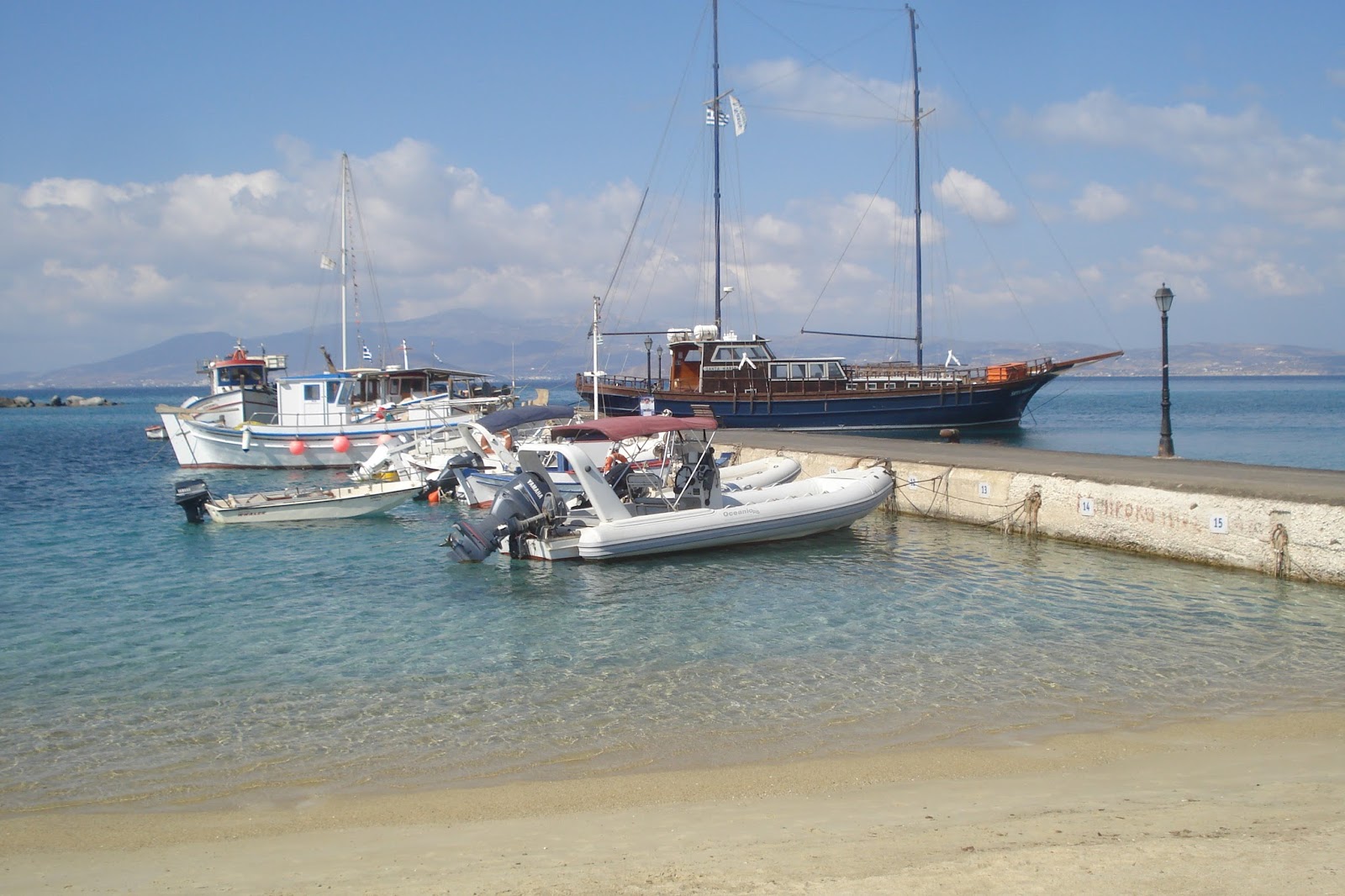
I started my holiday adventures on my favorite island NAXOS, at my favorite spot, Maragas Camping, Agia Ana. The most fabulous beach, and fun staying in a bed-tent for three days.
Then I moved into a lovely pension in the town with a room right by pool-side.

 The "Something Else" Pension

 There's lots to see on the island of Naxos and I like to go back there every time I visit Greece. 

 The walk out to the "Portada" 

 The Portada "Apollo's Temple"


 I love the Venetian influence on Naxos with these vaulted streets. 

 Then, back to Athens, an on to many more adventures.  These included a couple of day trips with friends, a visit to the island of Salamina, an afternoon at the Temple of Poseidon, Sounion, and many others.  Here's a sample of a few of them.
 The Corinth Canal
 A day trip to the Peloponnese:  Fish farms

The small ancient theatre of Epidaurus.


The Big Ancient Theatre of Epidaurus

Then some trips around Athens and the mainland.  There is so much to do there and many choices of where to spend your time. You really need to allow for this when you visit Greece.
 Athens, the Acropolis
 The Temple of Poseidon, Cape Sounion
The Temple of Poseidon (try to get there for sunset!)

One day I made a trip to Marathon, where the famous battle took place between the Greeks and the Persians. This is where today's marathons begin, just as the runner who bore the news of the Greek victory ran from there to Athens (and then died of exhaustion!) 
 Grave mound of the fallen warriors
Marathon, monument for the runners
Then I made a trip to Salamina island, also the scene of a famous naval battle between the Greeks and Persians. My friend Christina lives there so we always go exploring and this year was a very special archaeological adventure!
 Monument to the fallen warriors
Monument for the Battle of Salamis
I had heard from my friend about a cave up on the mountain where the dramatist Euripides had once lived. I was determined to make the climb up there, and I did!  (It wasn't as hard as I thought it would be!)  
 The Cave of Euripides
It wasn't all Archaeology on this trip. I even did a reading of my historical novel SHADOW OF THE LION: BLOOD ON THE MOON at the Canadian Institute. 
Then there was more exploring and having fun. 
 somewhere around the Agora

 along one of the old walled areas of ancient Athens.
 my travel buddies

My Athens pals!

And most of all I love hanging out with my Athens pals.  This year there will be lots more adventures too and I'm really looking forward to seeing everyone and being there, in Athens, my second home, and exploring Greece, my favorite place to be! 

Thursday, January 29, 2015

THE BATH-HOUSE OF THE WINDS and Other Ottoman and Roman Places to Visit in Plaka


Plaka
There's a lot more than ancient Greek ruins around Athens.  In the Plaka you'll find remains of the Romans and Ottoman Turks as well as the Classical.  The Romans took control of the city in the second century BC and added some of their own architectural splendor, though it could never match the Greek's.  During his reign from 117 - 138 AD the Emperor Hadrian left his mark in many areas. www.europeupclose.com/article/greece-hadrians-athens/  Beyond Hadrian's Arch which marked the border of Classical Athens, was the Roman city, including the Roman baths. Although it had been begun centuries earlier, he also put the finishing touches on the Temple of Olympian Zeus. Hadrian built a library in the Plaka area and nearby is the Roman Forum with it's notable Tower of the Winds. Years later, a wealthy Roman senator built the Herodes Atticus theatre in honour of his wife. Today the "Herodian" is a popular theatre for nusic concerts and staging ancient dramas.
Roman Forum

Not just Roman ruins can be found in the Plaka.  There are reminders of the Ottoman occupation of the city from 1456 to 1821. Most of these have been left in ruin or turned into museums to house Greek artifacts.

The Tzistarakis mosque, built in 1759, dominates Monastiraki Square. It is now the Museum of Greek Folk Art: Ceramics Collection. Take time to go inside and see the collection of pottery and other artifacts

Tzistarakis Mosque

The oldest mosque in Athens,  the Fethiye Tzami built in 1458 occupies a corner of the Roman Forum. It is now used to store artifacts found around the site.

Across from the Forum entrance are the remains of the medresse, an Islamic  school. During the Ottoman rule and Greek independence it was used as a prison and notorious for it's harsh conditions. A tree inside the courtyard was used for hangings. The prison was closed in the early 1900's and most of it was torn down.
Turkish Medresse

A place that has always intrigued me, is the Turkish bath house. Finally this time in Athens I was lured inside and spent a pleasant hour wandering the halls and rooms.  It was originally built in the 1450's and has been carefully restored. Roman and Byzantine bath-houses served as models for the Turkish hammams though there were some differences to meet the prescription of the Koran. The baths were used in shifts by men and women until an expansion in the 19th century provided more space for what you see today. Restoration work was completed in 1998. It's called "The Bath-house of the Winds" and is located at Kyrrestou 8, a street that leads to the back of the Roman Forum near the Tower of the Winds. It's open Mon & Wed- Sun 9 am- 2.30 pm. Free.

Bath-house of the Winds


Also nearby, around the corner from the Roman Forum at Dhioyenous 1 - 3 is the Museum of Greek Folk Instruments. It displays every type of instrument played in Greek history all attractively displayed in this old mansion. Open Tues & Thursday-Sun 10 am - 2 pm; Wed. noon - 6 pm. Free. There's also a museum shop where you can buy CDs of traditional Greek music.
Museum of Greek Folk Instruments