Total Pageviews

Thursday, September 13, 2012

MY CARIBOO ROAD TRIP: Part One

NORTH TO THE KLONDIKE GOLD FIELDS:  HOPE AND BEYOND

For years I've been wanting to visit the old gold rush town of Barkerville in British Columbia's Cariboo district and finally this year I managed to accomplish this.  It's a long trip by bus, 10 hours from Vancouver, but the journey was well worth it, through some of the west coast's most spectacular scenery.
The first brief stop along the way was the town of Hope. (The sign itself captured my attention!) Hope is the entryway to the Fraser Canyon where the mighty Fraser and Coquihalla rivers join. The town is nestled in the mountain pass of the Cascade and Coast Mountains.

Heading north, we soon pass the famous "Hells Gate", located immediately downstream of Boston Bar in the Fraser Canyon. Here the towering rock faces of the Fraser River plunge toward each other creating rapids.  From here you can go on river rafting excursion through this narrow passage of roiling water.


This has also been a popular fishing ground for the local aboriginal communities and in the past, European settlers also congregated there to fish for salmon.  It was on this route that the gold rush miners traversed up the river to the Cariboo gold fields.

This is also the canyon area where the first explorers came paddling down the river or portaging to the Coast. The scenery is spectacular, still as wild as it was then when later men trudged north in search of gold.

North, toward the village of Cache Creek, there were the remains of forest fires that had ravaged the countryside in recent years.

Cache Creek is located at the junction of the Trans Canada Highway and Highway 97 on the Thompson Plateau, junction of the Cariboo and Thompson Valleys. There are rolling grasslands and hills covered in sagebrush and cactus with a backdrop of beautiful mountains.


Cache Creek was the halfway point for prospectors en route to the Cariboo Gold Fields. Here (above) you'll see a way-marker pointing in the directions of the many places these hopeful miners came from. Many were from California, others from England, Scotland, Ireland and other European countries.  Today travelers like myself who are following the historical gold rush trail still stop off at Cache Creek.

All along the route are pristine lakes.  The little town of Lac La Hache is renowned for excellent fishing. The lake is a popular for swimming, boating, parasailing, water skiing and camping. Even in the winter there are activities such as ice fishing, cross country skiing and skating.  I was most impressed by Lac La Hache. For many years I knew the name but this was the first time I'd visited there.

 
Next stop is the rustic village of 100 Mile (also known as "Hundred Mile House") located on a plateau where there are numerous lakes.  The area is excellent for swimming, fishing, bird watching and horse-back riding. For thousands of years the Chilcotin First Nations lived, hunted and traded here and still claim the region as their traditional territory. In the mid 1800's miners flocked to the area folling the news of gold in the Cariboo. A wagon road was built to manage the traffic that came up from Lilloet on the Fraser River north to Barkerville. At the time, this was known as Bridge Creek House and was renamed 100 Mile House because it was 100 miles from Lilloet (Mile 0). Between 1862 and 1870 there were more than 100,000 travelers through this region. Eventually a freight and stagecoach line carried people and provision to the gold fields, cattle were imported and a thriving ranching culture developed.  By the 1900's logging and forestry became the dominant economic source.  Today tourism, logging and ranching are the leading industries in the South Cariboo.

After Lac la Hache, passing through 100 Mile, there is another spectacular lake known as Dragon Lake.  At the north end of this lake is Williams Lake, a small town in the central Cariboo. They are famous for the Williams Lake Stampeded. The town is named in honour of Secwepemc chief William who was instrumental in counselling the Shuswap band from joining the Chilcotin in their uprising against the new settlers back in the 1860's during the Cariboo Gold Rush.

This entire area is so rich with history, that for a history-buff like me it was a treasure trove of stories, added to the magnificent scenery.  It was easy to imagine being one of those early settlers, the men trudging north to the gold fields, or the brave explorers who came down the river to the west coast.

The Cariboo Gold Rush attracted a rush of American prospectors to the Fraser Canyon in 1858 Many stayed on as permanent settlers. Others began to explore the rest of the province searching for new finds. It was after Billy Barker, a miner from England, struck pay-dirt north in Barkerville, that floods of men arrived from other parts of the world seeking their fortune in the gold fields around Quesnel.  The area became known as "the Cariboo", NOT "Caribou", which is an Algonquin word "xalibu" meaning "a pawer or scracher'. In BC it is regarded as a corruption of the French word "Cariboeu or Cerboeuf" meaning "reindeer" as it is a favorite haunt of that species.

After ten enjoyable hours on the Greyhound bus, by 6.30 pm that evening I arrived at the town of Quesnel where the next phase of my Cariboo adventure began.

NEXT: Part II.  Quesnel and beyond.


Saturday, September 01, 2012

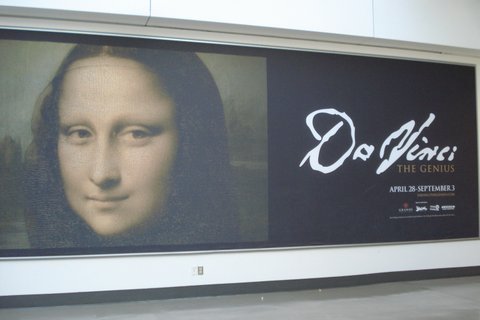
AN AFTERNOON WITH DA VINCI AT TELUS WORLD OF SCIENCE


I have to admit that it has been about twent-three  years since I last visited Science World. That was when my now adult grandson was four years old and I’d taken him there to see a dinosaur exhibit. We no sooner had walked into the hall with all the gigantic prehistoric beasts when Mike freaked out and wouldn’t go any farther. That was it for Science World until this week when I decided to take in the Leonardo Da Vinci exhibit.  I can assure you that from now on when there’s an exhibit such as this I won’t hesitate to go back.  And if you have kids, there is plenty there to keep them amused and occupied without being scared stiff like little Mike was!

Science World at Telus World of Science  http://www.scienceworld.ca is run by a non-profit organization and features permanent interactive exhibits and siplays as well as special exhibits such as the Da Vinci one.  The building itself is a spectacular design, visible from any point around False Creek with its lit-up dome.  During Expo ’86 it was used as the Expo Centre and later turned over to the community, known simply as Science World.
 
The Da Vinci – the Genius  http://www.scienceworld.ca/davinci exhibit is one of the special exhibitions presented by Science World. It’s one of the most comprehensive collections ever compiled on Leonardo Da Vinci’s works, including his amazing inventions, anatomical sketches, reproduction so this most famous paintings and interactive presentations. No photographs are allowed in the exhibit itself.  You’ll be amazed to see how many of his inventions actually were developed for use in our modern world. And the detailed descriptions and analysis of his paintings including Mona Lisa and The Last Supper are something not to miss!


The Da Vinci exhibit ends on September 3 so don’t miss it!

In addition to the Da Vinci exhibition, I enjoyed wandering around the other exhibits where children and adults alike were having fun exploring and trying out the various displays such as in the puzzle room and the display of the human anatomy of life cycle.
In the Nature Science exhibit room:
The Pterosaur was a flying reptile of the Cretacious period. It could fly great distances, even cross continents!

Nature exhibit, Beaver and dam
 
Puzzle Room, fun for adults and kids!

WELCOME!
 
 A 'piano' that plays when you walk on it!


 Play room

 An amusing sign in the room about sex education


Physical Fitness (interactive)


Science World will have new operating hours from September 8 to June 28, 2013, closed on Mondays except for statutory holiday Mondays.  Open Tuesday-Friday from 10 – 3. Saturday, Sunday and holidays open from 10 – 8. 


Friday, August 10, 2012

GRANVILLE ISLAND ART

Granville Island boat houses, a work of art.

Even the way these racing canoes are lined up is artistic.

  I always enjoy spending an afternoon browsing around Granville Island.  Sometimes it's just to look around the Farmer's Market, other times I've gone there to attend events at the various theatres and the Performance Works. But the last time I visited, while meandering along the False Creek path by the line-up of boat houses, I discovered something new to focus on:  the Granville Island art.

An unsual sculpture with moving parts that reflects Granville Island's industrial past.

Industrial Art

Cement Trucks

Seagull cement worker


The Island, which once was just an industrial area, is a perfect location of artists to display and market their work. In the quiet atmosphere, the picturesque surroundings, away from the bustle of downtown, you can relax and browse around enjoying the variety of art works that are on display. And Granville Island is also the home of the Emily Carr art school, allowing an easy access and appropriate venue for the artists to show their sometimes quirky but always interesting pieces of work.

Here's a few that I discovered on that Sunday afternoon walk.
First Nations carvers workshop


Totems

Rocking  Horse

There are miniature boat shows on the Island too.

I found this gallery located behind some of the main buildings by the False Creek.  There were some unusual sculptures on display there.


One of my favorites was this fountain made of saxophones.

A funny rooster


Sidewalk art.

This icecream cone made me want to hurry to the market to buy myself a treat!


Besides the visual art you'll also find musicians entertaining at the Market Square.

Hurdy-gurdy player

And beautiful displays of flowers.

Inside the Farmer's Market even the produce is artistically displayed!


Everywhere you look on Granville Island you will find art!

Mermaid

LINKS TO GRANVILLE ISLAND ART:


FARMERS MARKET